

Google’s Menace Intelligence Group (GTIG) has printed a significant safety report warning that synthetic intelligence is now being weaponized by state-linked hackers and prison risk actors at industrial scale — with autonomous malware, AI-generated zero-day exploits, and credential-targeting operations posing a direct and escalating risk to crypto customers counting on normal safety measures.
The Might 11 report, printed on the Google Cloud weblog by GTIG and drawing on Mandiant incident response engagements, marks a major escalation from the group’s February 2026 findings. The place that earlier report recognized AI-assisted adversarial exercise as nascent and experimental, the newest evaluation describes a mature transition — one the place generative fashions are actually embedded in offensive workflows at scale, not as a curiosity however as operational infrastructure.
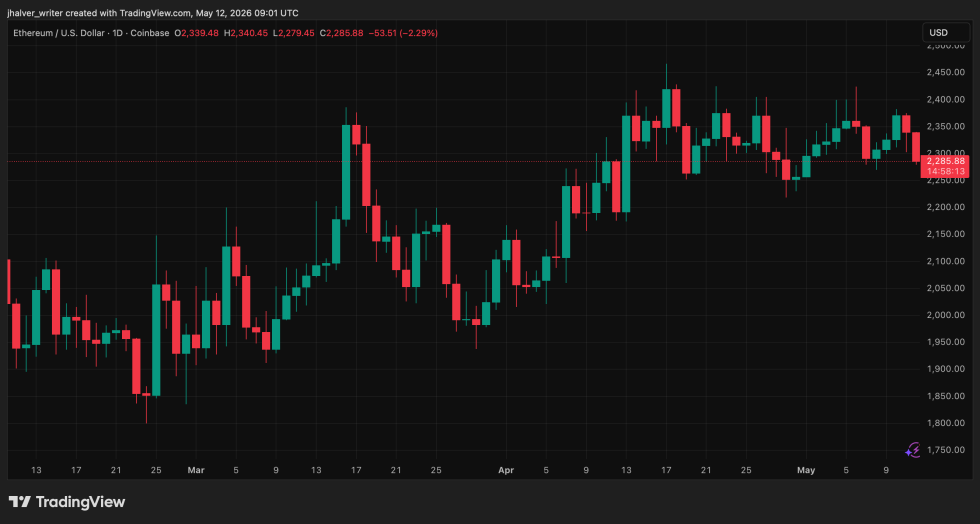
ETH's worth data some losses on the each day chart. Supply: ETHUSD on Tradingview
AI Writes Its First Zero-Day Exploit
Essentially the most vital disclosure within the report is unprecedented. For the primary time, GTIG has recognized a risk actor utilizing a zero-day exploit believed to have been developed with AI help. In response to the report, a prison risk actor had deliberate to deploy the exploit in a mass exploitation occasion — a state of affairs that GTIG’s proactive counter-discovery could have prevented.
The report notes that state-linked actors related to China and North Korea have individually demonstrated vital curiosity in utilizing AI for vulnerability discovery. The implications for crypto customers are direct: pockets interfaces, trade login portals, and browser extension-based authentication instruments all depend upon the identical underlying software program layers that zero-day exploits goal.
Polymorphic Malware And The Limits Of 2FA For Crypto Customers
Past zero-day growth, the report paperwork AI-accelerated growth of polymorphic malware — code that rewrites its personal construction to evade detection — linked to suspected Russia-nexus risk actors, per GTIG’s evaluation. AI-generated decoy logic is being embedded in malware payloads to defeat signature-based safety techniques.
Essentially the most direct risk to crypto customers, nonetheless, comes by means of a functionality GTIG calls PROMPTSPY — an AI-enabled malware that alerts a shift towards autonomous assault orchestration. In response to the report, PROMPTSPY interprets system states dynamically and generates instructions in actual time to govern sufferer environments. Utilized to credential theft, this class of malware can observe and reply to authentication flows in ways in which static assault instruments can not — together with timing assaults towards SMS-based and app-based two-factor authentication techniques throughout reside classes.
Commonplace 2FA, lengthy thought-about a dependable safety baseline for trade and pockets entry, operates on the idea that an attacker can not observe and reply to the authentication window in actual time. Autonomous, AI-driven malware able to deciphering system states adjustments that assumption materially.
A Menace Atmosphere That Has Shifted
GTIG’s report frames the present second as a dual-use inflection level — AI is concurrently turning into a high-value goal for assaults and a complicated engine driving them. For individuals within the nascent digital asset sector, the place a single compromised seed phrase or session token represents an irreversible loss, the implications are substantial.
The safety practices that adequately protected crypto customers two years in the past are more and more inadequate towards an adversarial toolkit that now consists of AI-generated exploits, self-modifying malware, and autonomous credential-harvesting operations working quicker than human defenders can reply.
{Hardware} safety keys, air-gapped signing units, and multi-signature pockets architectures symbolize the present frontier of significant safety — and the space between these measures and normal 2FA has by no means been wider.
Cowl picture from Grok, ETHUSD chart from Tradingview

Editorial Course of for bitcoinist is centered on delivering completely researched, correct, and unbiased content material. We uphold strict sourcing requirements, and every web page undergoes diligent evaluate by our workforce of prime expertise consultants and seasoned editors. This course of ensures the integrity, relevance, and worth of our content material for our readers.


